

India Entry
India Market Entry Services for Foreign Companies
Business setup. Regulatory compliance. Cross-border structuring.
Supported by a team with international market entry experience across 15 countries.
Entering India Requires More Than Registration
Regulatory approvals, investment structuring, and compliance obligations in India often vary based on the sector, ownership model, and nature of business activity. Many foreign businesses face delays not because they moved too quickly, but because the broader regulatory and operational landscape was never mapped clearly at the outset. That is where Greenvissage steps in, helping businesses develop a clear India market entry strategy, understand regulatory requirements, and establish the right foundation before the process begins.
SERVICES
India Market Entry Services Everything You Need in One Place
India Market Entry Strategy Advisory
FEMA & RBI Compliance
Business Setup in India
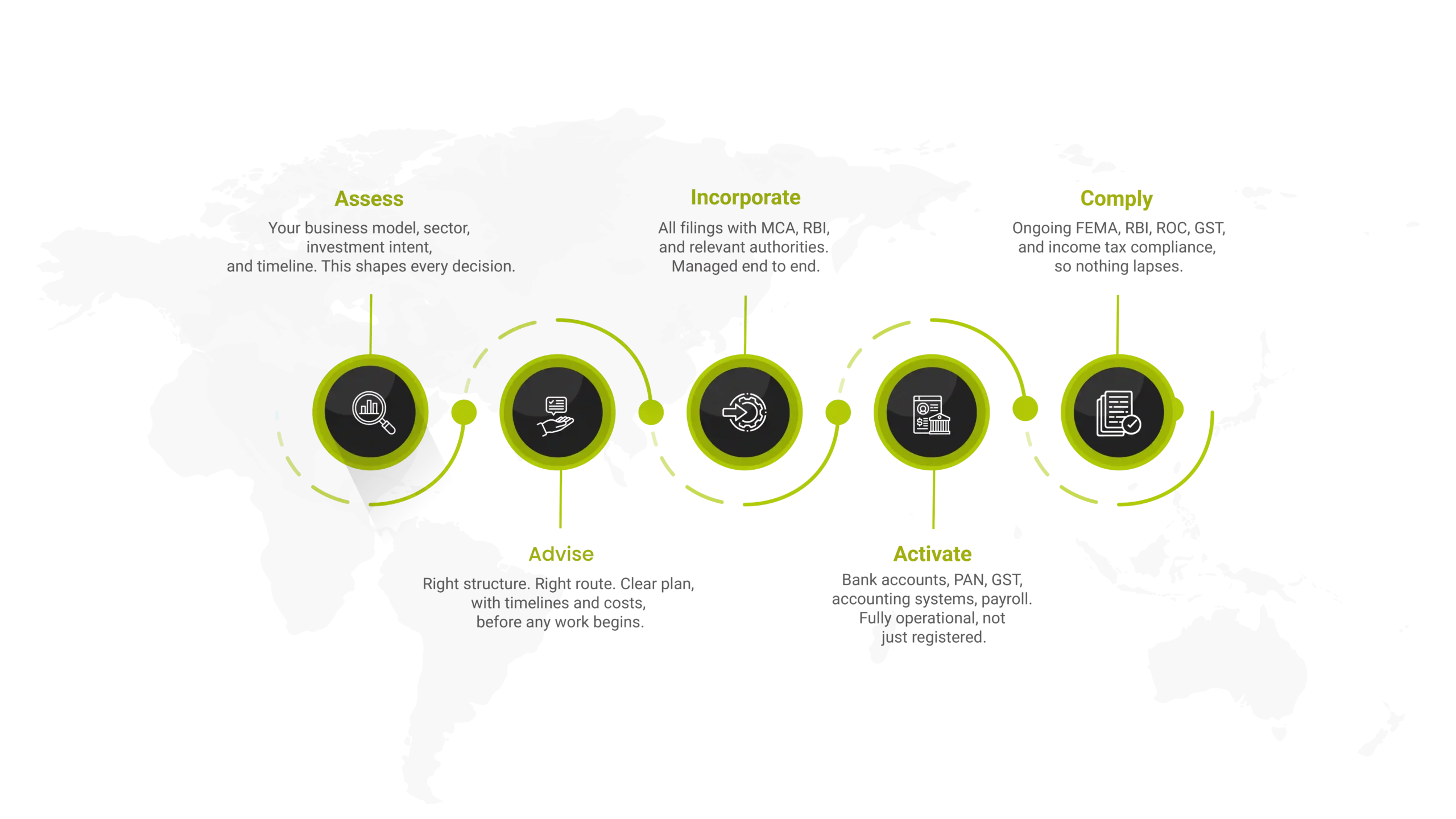
Our India Market Entry Process

Trusted India Market Entry Services Backed by Experience
- Clients from 15+ countries
- End-to-end — strategy through ongoing compliance, one relationship
- Deep expertise across Company Law, FEMA, RBI, FDI policy, GST & income tax
- CFO-level oversight built into every engagement
- Senior advisors on every account — not rotated junior staff

Still Have Questions?
Yes, in most sectors. Foreign Direct Investment (FDI) under the automatic route allows 100% foreign ownership without prior government approval. Certain industries have sector-specific restrictions or approval requirements, which we assess during the India market entry process.
A Branch Office operates as an extension of the parent company and is subject to certain operational restrictions. A Subsidiary is a separate legal entity incorporated in India and generally provides greater flexibility, local credibility, and limited liability.
The timeline depends on the entity structure, industry, and approval requirements. In most cases, establishing a fully operational business in India takes between eight and fourteen weeks.
FEMA governs foreign exchange transactions and foreign investment activities in India. Foreign-owned businesses must comply with FEMA regulations and RBI reporting requirements to avoid penalties and regulatory issues.
Yes. Most stages of business setup in India can be completed remotely. Certain documents may require notarisation or apostille procedures in the company's home country.
Planning Your India Market Entry?
Let’s start with a conversation.
Tell us about your business. We’ll help you develop the right India market entry strategy, establish the appropriate structure, and navigate compliance requirements with confidence.
- Market Entry Strategy
- Company Incorporation
- Entity Formation
- FEMA & RBI Compliance
- Business Setup