Inbound Structuring. PE Risk. Withholding Tax. Repatriation. Inter-Company Agreements. Where Indian tax regulations interact with international transactions, structures, and reporting obligations, Greenvissage provides international tax services in India that helps businesses stay compliant, aligned, and commercially prepared.
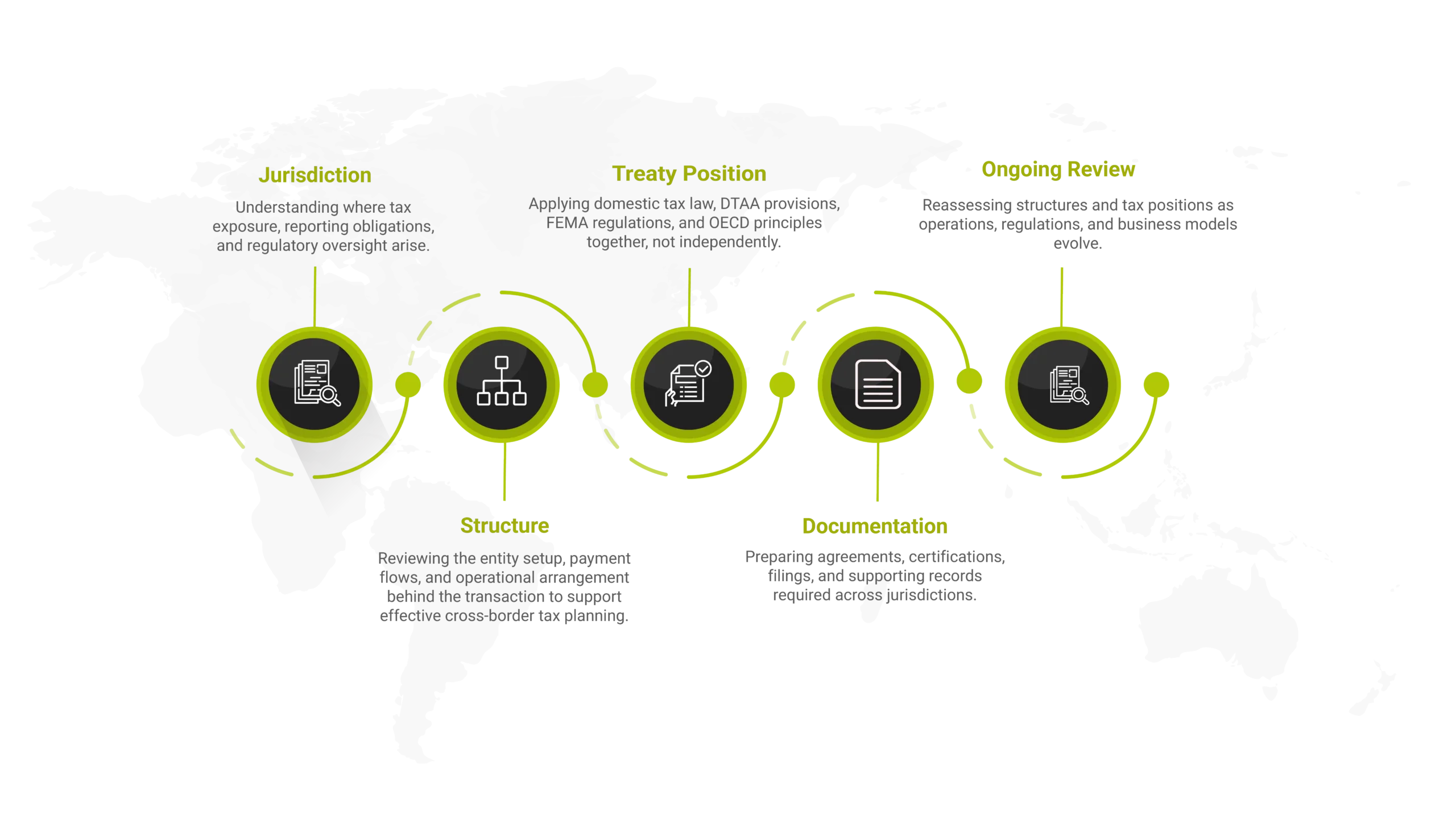
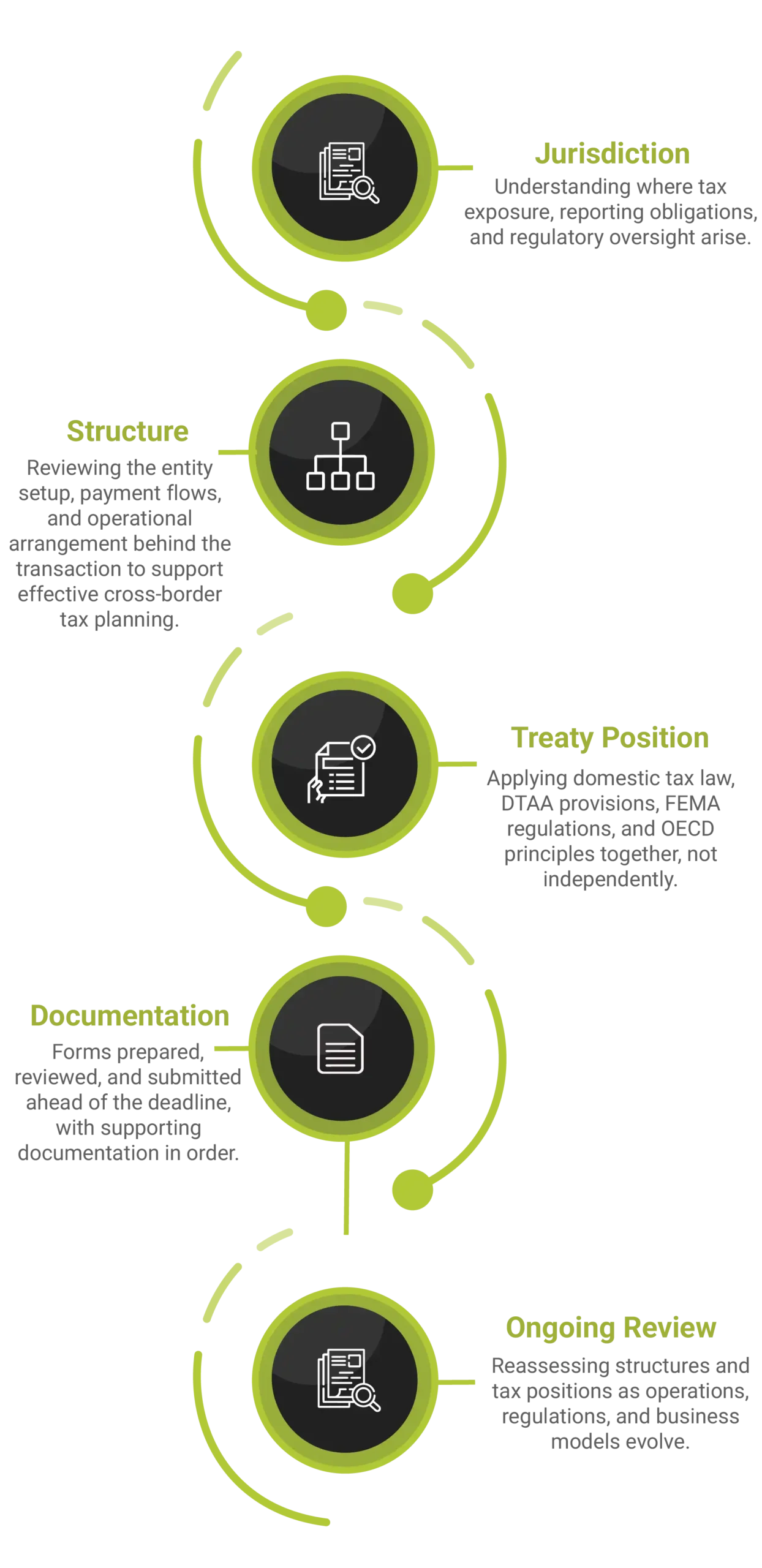
For foreign companies entering India, or Indian businesses operating internationally, cross-border tax is not limited to a single compliance requirement. Transactions are often evaluated simultaneously across tax, regulatory, exchange control, and reporting frameworks. Cross-border structures and transactions in India may involve obligations under:
A single transaction can create exposure across multiple jurisdictions and regulatory areas at the same time.


Cross-border advisory works best when legal, tax, operational, and reporting considerations are viewed together. Our role is to help businesses navigate those moving parts in a coordinated and commercially practical manner through structured international tax services in India.
A Permanent Establishment (PE) is a taxable presence in India, even without formal incorporation. If business activities in India meet the PE threshold under domestic law or an applicable DTAA, profits attributable to that presence may become taxable in India. PE exposure should ideally be evaluated before operations begin.
India has tax treaties with more than 90 countries. Treaty applicability depends on factors such as tax residency, nature of income, and transaction structure. Each transaction needs to be evaluated independently under the relevant DTAA provisions to determine available treaty relief and double taxation avoidance in India.
When an Indian entity makes payments to a non-resident, such as royalties, technical fees, interest, or dividends, tax may need to be withheld before remittance. The applicable withholding tax rates in India depend on domestic tax provisions, treaty eligibility, and the nature of the payment.
Repatriation of dividends, royalties, interest, or service fees from India involves both tax and FEMA considerations. Businesses should evaluate the most appropriate approach based on regulatory requirements, cash flow needs, and overall tax efficiency before deciding how to repatriate profits from India under tax and FEMA regulations.
Whether you are entering India, restructuring international operations, or managing ongoing cross-border transactions, Greenvissage helps businesses navigate tax exposure, regulatory requirements, and transaction structuring with coordinated advisory support.